

How to record the disposal of assets
Content
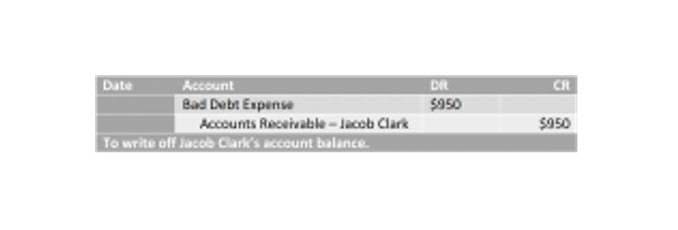
In the event of a sale, the fixed assets that have been sold must cease to be included in the assets of the company. The assets of the company must be reduced by the amount of the fixed asset that has been sold. In this article, we will explain what fixed assets’ disposal means, in which case you have to proceed with fixed assets’ disposal, how to record it, and some examples. Fixed assets are long-term assets that a business holds for more than one year and are used in the production of goods and services. The disposal of fixed assets refers to the process of selling or otherwise getting rid of these assets when they are no longer needed. Also, if a company disposes of assets by selling with gain or loss, the gain and loss should be reported on the income statement.
- When the cash receipt from the disposal of assets is greater than the net book value, the difference is the gain on the disposal.
- If there is a difference between disposal proceeds and carrying value, a disposal gain or loss occurs.
- In other words, it’s part of keeping your accounting records up to date.
- In the final part of the question the business sells the asset for 4,500.
- He spends most of his time researching and studying to give the best answer to everyone.
Debit the depreciation account and credit the asset account for its original cost. If cash is received from selling, debit cash and credit sales revenue. If the asset is sold at a loss, record a loss instead of sales revenue. If there are any proceeds from the sale, you should record them accordingly.
Situation 1. The business writes off the fixed assets or scraps them as having no value
Click the plus sign (+) above the left menu bar and select create journal entry. QBO doesn’t have dedicated features for fixed asset disposals so you need to do this manually. Asset disposal is the removal of a long-term asset from the company’s accounting records. It is an important concept because capital assets are essential to successful business operations. Moreover, proper accounting of the disposal of an asset is critical to maintaining updated and clean accounting records.

Accordingly the gain on disposal journal entry would be as follow. Accordingly the loss on disposal journal entry would be as follows. When recording the disposal, adhere to proper accounting practices. Classify the asset type (tangible or intangible) and adjust accounts. It is recommended to consult an accountant or financial advisor for guidance. Besides, businesses must note that certain types of assets, like vehicles or real estate properties, have unique details.
Asset Disposal on Financial Statements
You can learn more about items to be included in the original cost of a fixed asset in our article on fixed asset accounting. There are four accounts affected when writing off a fixed asset at disposal. If the journal entries are incorrect, how to record disposal of assets it may affect the accuracy of the balance sheet and income statement. The equipment will be disposed of (discarded, sold, or traded in) on 4/1 in the fourth year, which is three months after the last annual adjusting entry was journalized.

After five years, the net book value of the tool is $5,000, i.e. $ 10,000 – (5 x $1,000). After 10 years of use, while the tool is considered obsolete, its value is zero. Fixed assets designate assets that form part of the company’s assets and which are intended to remain there in the medium or long term. Chartered accountant Michael Brown is the founder and CEO of Double Entry Bookkeeping. He has worked as an accountant and consultant for more than 25 years and has built financial models for all types of industries. He has been the CFO or controller of both small and medium sized companies and has run small businesses of his own.
Business Manuals
The company also experiences a loss if a fixed asset that still has a book value is discarded and nothing is received in return. When a business disposes of fixed assets it must remove the original cost and the accumulated depreciation to the date of disposal from the accounting records. A disposal can occur when the asset is scrapped and written off, sold for a profit to give a gain on disposal, or sold for a loss to give a loss on disposal. The fixed asset has no salvage value and it has a useful life of five years. When a fixed asset is no longer used it must be removed from the balance sheet.
- Accordingly the net book value formula calculates the NBV of the fixed assets as follows.
- He has been the CFO or controller of both small and medium sized companies and has run small businesses of his own.
- Combining the $20,000 and the $18,000 results in a book value (or carrying value) of $2,000.
- A company may no longer need a fixed asset that it owns, or an asset may have become obsolete or inefficient.
- When there are no proceeds from the sale of a fixed asset and the asset is fully depreciated, debit all accumulated depreciation and credit the fixed asset.
- There are two scenarios under which you may dispose of a fixed asset.
This means that the machinery is sold at a loss of $4,000 ($9,000 – $5,000). The asset’s book value on 4/1 of the fourth year is $2,100 ($6,000 – $3,900). Eric Gerard Ruiz is an accounting and bookkeeping expert for Fit Small Business. He completed a Bachelor of Science degree in Accountancy at Silliman University in Dumaguete City, Philippines. Before joining FSB, Eric has worked as a freelance content writer with various digital marketing agencies in Australia, the United States, and the Philippines.


